SEO Agency for Competitive UK Markets — Fix, Stabilise & Scale Organic Search
In competitive UK markets, an SEO agency plays a pivotal role in shaping search visibility, which directly affects demand, revenue, and long-term growth.
When that visibility becomes inconsistent or critical to commercial performance, an SEO agency must protect, correct, or scale it.
This guide explains when to hire an SEO agency, how to evaluate one, and how to manage search performance as competition increases.
What Does an SEO Agency Do in Competitive UK Markets?
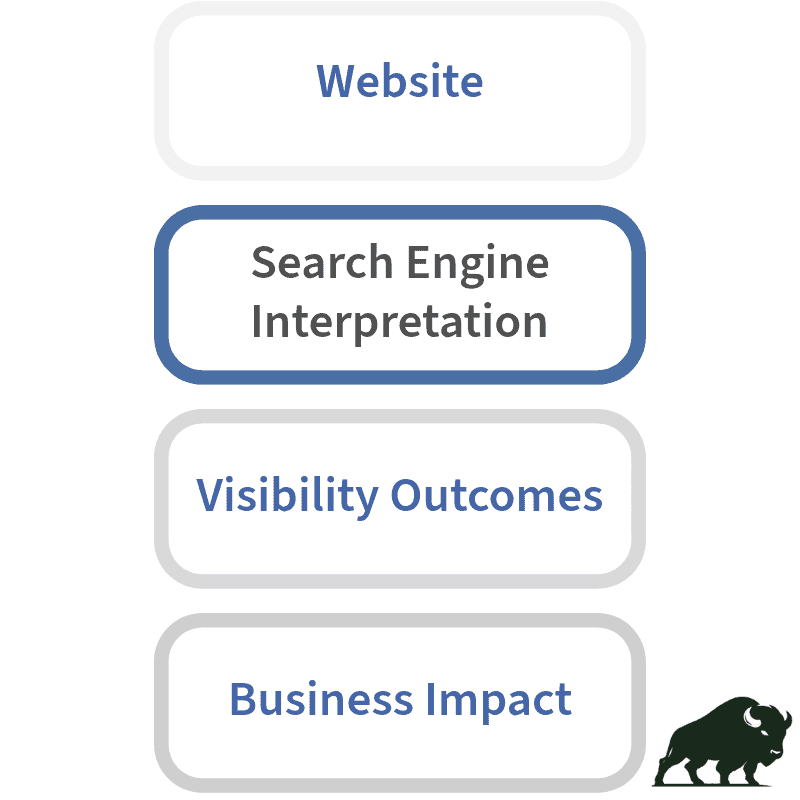
In competitive markets, an SEO agency manages how a business is evaluated and ranked in search, protecting, improving, and scaling visibility when performance is critical.
Search visibility depends on how well a website is understood, trusted, and evaluated by search engines. This interpretation is shaped by technical foundations, site structure, content clarity, and alignment with the signals search engines use to assess relevance.
When any of those signals weaken, visibility declines, often without obvious warning.
An SEO agency exists to prevent that loss, correct it when it happens, and control growth when conditions allow.
It is about maintaining a stable search presence that supports revenue, demand generation, and long-term growth.
In practical terms, a capable SEO agency is accountable for three connected outcomes.
- Fixing the issues that prevent a website from being correctly evaluated in search results
- Stabilising performance so visibility does not fluctuate with routine updates or changes
- Scaling growth only when signals are strong, measurable, and repeatable`
In national markets, SEO must coordinate visibility across broader geographies, larger site structures, and more varied commercial intents than local campaigns.
This is how SEO supports commercial decision-making in competitive environments through consistency, control, and governance.
What does an SEO agency actually do for a business?
It ensures search visibility is stable, interpretable, and aligned with business growth, even when competition increases.
When Does it Make Sense to Hire an SEO Agency?
Hire an SEO agency when visibility in search shapes commercial outcomes, influencing how your business is found, evaluated, and chosen.
At this stage, performance must be managed with consistency and accuracy.
Signs it’s time to hire an SEO agency
- Traffic, rankings, or performance shift without a clear cause
- Key pages or markets underperform inconsistently
- The site has grown in size, complexity, or commercial importance
- SEO decisions are made without a reliable performance baseline
- Visibility changed after switching supplier and needs review
- Organic search now drives leads, sales, or enquiries
- Internal teams lack the time or capacity to evaluate SEO independently
If your current SEO supplier is not delivering consistent visibility, or you’ve already switched providers without improvement, it’s important to diagnose what went wrong and whether a specialist replacement is the right decision.
The starting point is typically a structured assessment of current performance. For this reason, many businesses begin with an SEO Audit, which clarifies what supports visibility, what limits it, and where attention is required.
How Can You Verify if an SEO Agency is Legitimate?
An SEO agency’s legitimacy can be assessed through how it handles ownership, access, reporting, and documentation.
This matters because an SEO agency directly affects how your website is interpreted, based on the visibility signals defined earlier.
A legitimate agency works in ways that allow decisions to be reviewed, data to be verified, and responsibilities to remain clear.
What indicates an SEO agency is legitimate
- Confirms that account ownership remains with the business
- Provides direct access to reporting and analytics, allowing performance to be verified independently
- Explains reporting in terms of what will be measured and why it matters
- Documents changes, decisions, and priorities for later review
- Defines scope clearly, including what is included, excluded, and dependent on the client
- Explains pricing in relation to the defined scope, responsibilities, and deliverables
SEO pricing in the UK varies by scope and commercial context, reflecting the depth of analysis, governance requirements, and measurable performance outcomes rather than fixed deliverables.
Understanding how pricing reflects scope and responsibility helps validate whether an agency operates transparently. See more on SEO pricing in the UK.
Red flags when choosing an SEO agency
- Restricts access to block independent checks
- Avoids explaining how priorities are chosen
- Provides reports that cannot be independently verified using your own analytics or search platforms
- Changes scope without documentation
How do I avoid hiring the wrong SEO agency?
Choose an agency that keeps account ownership with the business, provides direct access to data, and documents decisions so performance can be verified.
What to Look For in an SEO Agency Proposal?
An SEO proposal outlines how performance will be diagnosed, prioritised, and measured, so outcomes are clear and progress is verifiable. A strong proposal makes the problem, the priorities, and the measures of progress clear so decisions can be made with confidence.
Does the proposal identify the real problem?
A credible SEO proposal begins with diagnosis. It should explain what’s affecting search performance and how that impacts visibility, leads, or demand.
Clear diagnosis connects the proposed work to the underlying causes of underperformance.
When diagnosis is missing, it becomes difficult to judge whether the proposed work addresses a real constraint or reflects a standard set of activities.
How does the proposal sequence the work?
Search results depend on sequence. Some work creates stability; other work drives growth once that stability is in place.
A good proposal shows what must be done first and what depends on those early steps. Without this order, progress is hard to track and harder to trust.
A proposal should prioritise foundational work that enables consistent evaluation before introducing growth strategies.
What work is included and excluded in the proposal?
Scope must be clear. A proposal should define what work is included, what isn’t, and what depends on input from your team.
This helps track progress, clarify roles, and avoid misunderstandings later.
Without clear definitions, the work can shift unexpectedly during the project, leading to unclear expectations, uncertain outcomes, and confusion around costs.
How will success be measured in the proposal?
Progress requires clear signals. A strong proposal defines the metrics to be tracked, how often they’re reviewed, and when meaningful results can be expected.
It explains what will be tracked, why it matters, and how it shapes future work.
What must an SEO proposal include?
Your proposed must explain the problem, the order of work, the scope, and the signals that define progress.
What happens after you hire an SEO agency?
Once an SEO agency is hired, the first step is to establish access and assess how the website is currently being evaluated in search results.
This follows the principles in our SEO Explained Guide, which defines how visibility is established, measured, and maintained.
The initial phase consists of four defined actions.
Account access is established
The agency is granted access to analytics platforms and search systems, while ownership remains with the business, so performance can be reviewed directly and decisions can be checked.
Current performance is assessed
The agency reviews how the site is being interpreted, using the same visibility signals defined earlier.
Blocking issues are fixed
The agency fixes problems that stop the website from being seen and understood by search engines. These problems often relate to how pages are discovered, how content is structured, or how signals are communicated, all of which influence visibility.
Fixes are applied before any growth work is considered.
Performance is stabilised
Changes are introduced methodically, ensuring that search visibility does not shift in response to routine updates or platform changes. Stability means that performance reflects intentional work, so each change can be observed, understood, and built upon.
Only after these steps are complete does the agency move to growth. Scaling is pursued only after visibility is stable, search signals are consistent, and each change can be measured against a reliable baseline.
The outcome of this phase is a website that can be evaluated consistently, monitored accurately, and improved without introducing volatility.
How long does it take to know if an SEO agency is working?
Early signs include verified data and reduced instability. Measurable growth follows only after issues are fixed, and performance is stable.
Why Should SEO be Fixed Before it’s Scaled?
Expanding SEO efforts before resolving underlying issues increases risk and reduces control.
When a website has unresolved issues, such as pages not being indexed, content being misinterpreted, or signals being inconsistent, any new work is affected by the same problems.
Expanding content or targeting without fixing issues widens the same limitations, making results harder to interpret or trust.
Fixing SEO provides a stable foundation before expansion.
The process follows a defined sequence:
- First, current performance is assessed to understand where visibility is limited and why.
- Then, the causes of those limitations are identified, whether technical, structural, or content-related.
- Next, those issues are resolved so pages can be discovered, interpreted, and evaluated consistently.
- Once the site is stable, changes in performance can be measured accurately over time.
Only after this is complete does scaling become reliable.
Without this foundation, growth efforts can lead to inconsistent results, missed opportunities, or misleading signals.
Do you need to start SEO again if it hasn’t worked?
No. SEO work can often continue by identifying what’s limiting visibility and resolving those issues. Correction is more effective than starting over.
How do You Stablise Performance Over Time?
SEO performance is stabilised by making visibility predictable. Stability allows search outcomes to be measured, understood, and adjusted without disruption.
Unstable performance is usually caused by unmanaged change.
New pages are added without considering structure.
Content shifts away from topical relevance.
Technical updates alter how pages are processed.
These unmanaged changes interfere with the evaluation signals defined earlier, reducing the predictability of search visibility over time.
Stabilisation requires governance.
This means maintaining consistent structure, keeping technical foundations intact, and reviewing performance regularly.
Visibility should reflect deliberate changes.
Stability is supported by controlled change. Opportunities are evaluated, introduced gradually, and scaled only after their impact is understood.
When SEO is stabilised, visibility doesn’t swing unexpectedly. Performance can be explained, progress can be tracked, and decisions can be made with confidence.
What does SEO stability actually mean?
SEO stability means visibility changes reflect deliberate actions, not unintended side effects.
When is SEO Ready to Scale?
SEO is ready to scale when performance is stable, and outcomes can be clearly linked to specific actions. In competitive UK markets, scaling too early increases uncertainty and weakens regional signal alignment.
UK-wide SEO scaling also requires strong technical foundations to maintain clarity across multiple locations or service areas.
Before expansion, a website must be consistently indexed and interpreted, and key pages should perform predictably. If rankings or traffic shift without clear cause, broadening coverage makes it harder to see what’s improving results and what’s holding them back.
Scaling increases complexity. Without clear structure, expansion compounds confusion and weakens performance oversight.
When SEO is ready to scale, growth becomes deliberate. New targeting can be introduced without disrupting existing performance, and the impact of each change can be evaluated with confidence.
When is SEO ready to scale?
SEO is ready to scale when performance outcomes are consistent, the causes of change are identified, and you can forecast impact with confidence.
Summary: Fix, Stabilise, Then Scale SEO Safely
Effective SEO follows a deliberate sequence: fix what limits visibility, stabilise performance to ensure consistency, then scale growth with confidence. This reduces risk and improves decision-making, especially in competitive UK markets.