
SEO Prices in the UK: What Determines Cost, Value, and Risk
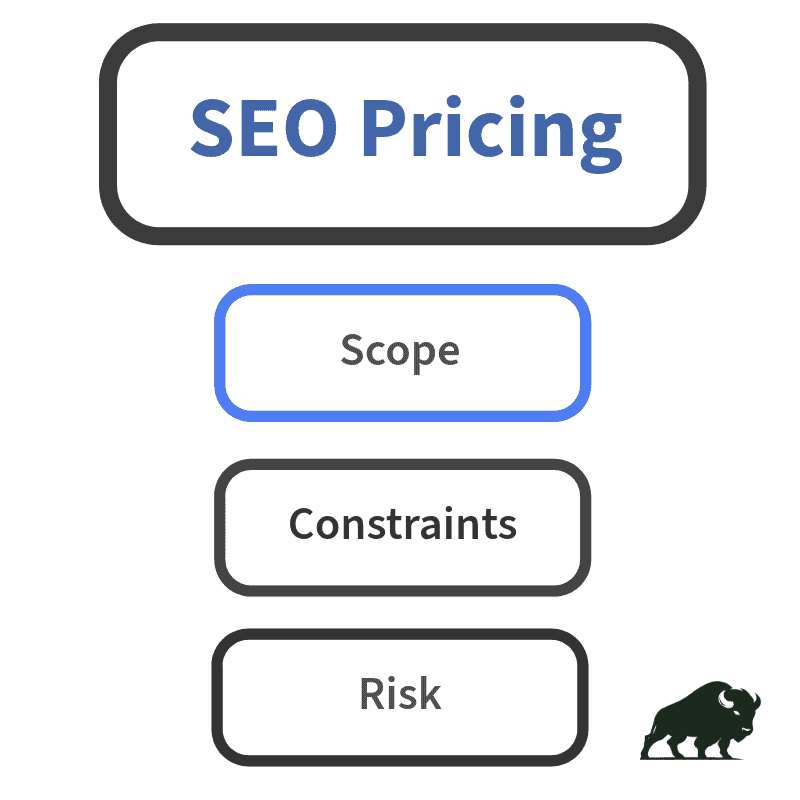
SEO pricing in the UK reflects scope, constraint, and strategic risk. It represents the effort required to build stable visibility within uncertain and competitive search environments.
Each website presents a unique set of challenges. Technical debt, content misalignment, trust signals, and geographic scale all influence how complex and resource-intensive a sustainable SEO strategy becomes.
Pricing is the mechanism used to quantify that complexity and define the operational scope required to manage it.
This guide explains how SEO pricing works, what factors influence cost, and why different models exist. It outlines typical UK pricing bands as context for interpretation, not as commitments. Readers will learn how to evaluate quotes, understand when pricing shifts over time, and decide which type of investment aligns with their current situation.
Understanding SEO pricing begins by recognising its role as a response to uncertainty, framed by risk, effort, and scope.
Table of Contents
- What “SEO Pricing” Actually Means in the UK Market
- What Determines SEO Prices (Cost Drivers Explained Simply)
- Common SEO Pricing Models (How SEO Is Usually Charged)
- Typical SEO Price Ranges in the UK (Context, Not Promises)
- How to Judge Whether an SEO Quote Is Worth the Cost
- When SEO Pricing Changes Over Time
- Choosing the Right SEO Investment for Your Situation
What “SEO Pricing” Actually Means in the UK Market
SEO pricing in the UK expresses how much responsibility, scope, and uncertainty are involved in improving a website’s visibility. It defines the level of effort needed to produce stable results in a changing and competitive search environment.
Every website operates under different conditions.
Some need ongoing technical repairs or clearer content structure.
Others compete in crowded markets where gaining trust and visibility takes longer.
SEO pricing reflects the extent of diagnosis, planning, and adjustment needed to make progress.
Four related terms shape how pricing is interpreted.
Price is the amount quoted.
Cost is the time and resources required to do the work properly.
Investment reflects the potential return over time.
Risk describes how uncertain outcomes are at the start.
Together, these explain what a quote is designed to account for.
Across the UK, SEO providers use different models. Some focus on completing tasks. Others take responsibility for identifying problems, setting priorities, and managing progress.
Pricing shows how much ownership is being taken, not just what is being delivered.
Understanding SEO pricing starts with knowing that it measures conditions and responsibility.
Scope and uncertainty, not task lists, shape the real cost.
Why there is no “average” SEO price
SEO prices vary because websites face different challenges. Site condition, competition, and business goals all influence how much work is needed.
Averages remove that context and give a misleading impression of comparability.
Is SEO pricing regulated in the UK?
No, SEO pricing is unregulated in the UK. Providers set their own models based on how much responsibility they assume. Since no standard pricing exists, understanding what a quote includes is more useful than comparing numbers.
What Determines SEO Prices (Cost Drivers Explained Simply)
SEO pricing reflects the constraints that shape how difficult progress will be. It measures the work required to create stable visibility based on a website’s condition, clarity, and competitive environment.
These constraints often interact. Rarely does one factor determine cost on its own.
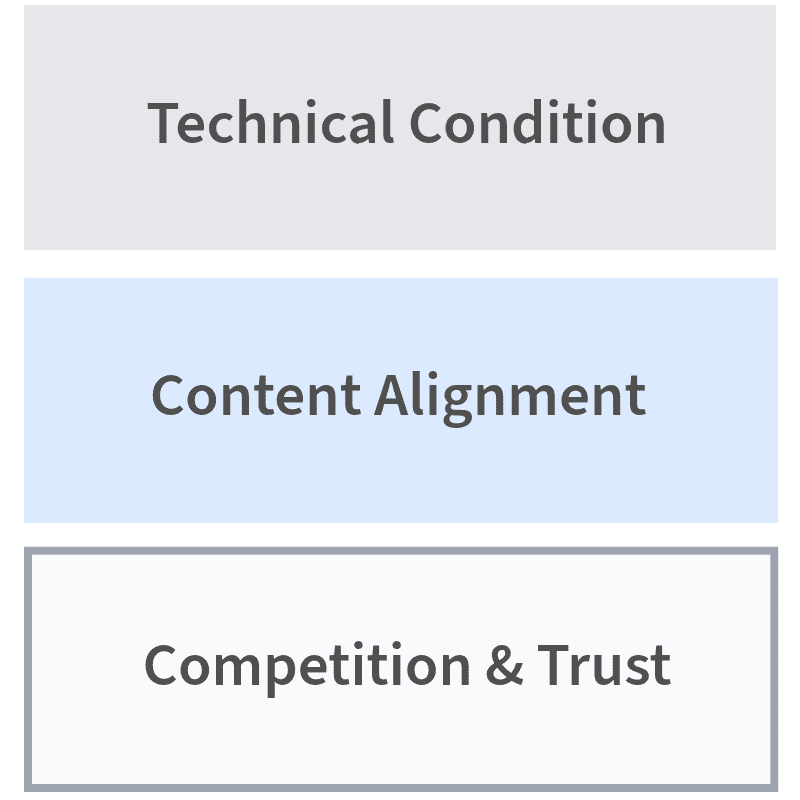
Three constraint groups typically define how pricing is set: technical condition, content alignment, and competitive pressure.
Each affects how efficiently search systems can access, understand, and prioritise a site. As constraints overlap, effort increases, timelines extend, and risk rises.
Understanding these drivers explains why quotes differ, and why pricing always begins with diagnosis.
Technical condition and constraints
Technical condition defines whether a website can be accessed and interpreted consistently. Crawlability, indexation control, and performance shape how search engines evaluate structure and stability.
When access paths are unreliable or signals conflict, content cannot be trusted or prioritised correctly. In these situations, pricing reflects the additional work needed to establish a dependable baseline before growth becomes possible.
These foundational issues sit within Technical SEO Optimisation, which covers how search engines interact with websites before relevance or authority are even evaluated.
When foundations are weak, improvements made elsewhere may be delayed, misinterpreted, or ignored.
Content scope and intent alignment
Content constraints appear when pages do not clearly match what people are searching for, or when multiple pages compete for the same outcome.
Intent mismatch and internal duplication reduce clarity, making it harder for systems to select the right page.
The broader or less structured the content scope, the more effort is required to restore relevance.
Pricing reflects the work needed to organise topics, reduce conflict, and realign the site’s purpose with search expectations.
Authority, competition, and trust pressure
Competitive pressure defines how much resistance a site faces in its market.
When many websites target the same subjects, trust signals play a larger role in determining which pages are prioritised.
Where trust is weak or poorly aligned with subject focus, more strategic reinforcement is required.
Even with strong technical and content foundations, competition raises the level of input needed to reach and maintain stability.
These conditions multiply effort. Pricing rises with resistance, not just workload.
Why do similar businesses get very different SEO quotes?
Because their constraints differ. Websites that appear similar on the surface can face very different technical, content, and competitive challenges. SEO pricing reflects those internal conditions, not outward similarity.
Common SEO Pricing Models (How SEO Is Usually Charged)
SEO pricing models are designed to match different types of constraints with the right level of structure and responsibility.
Not all websites require the same kind of work, and not all conditions allow the same level of planning.
Pricing models exist to manage this variation.
Each model defines how work is structured, how long responsibility is held, and how change is handled. It signals whether outcomes will be pursued through continuous iteration, fixed delivery, or strategic guidance.
Understanding these models clarifies what a quote is built to support, and what it excludes.
In the UK, SEO work is commonly delivered through monthly retainers, project-based engagements, or hourly and advisory models.
Some engagements blend models depending on complexity.
Monthly retainers
Retainers manage ongoing uncertainty. As search conditions shift, competitors adapt, and visibility changes, this model allows SEO work to respond in real time.
A retainer supports continuous diagnosis, reprioritisation, and adaptation. It assumes not all constraints are visible at the start and that stability is built through iterative interpretation, not one-time correction.
Project-based SEO
Project-based SEO applies when scope can be defined in advance. This includes diagnostics, targeted implementations, or work tied to scheduled changes like migrations.
This model is defined by boundary clarity. Objectives, timelines, and responsibilities are set early, and progress is measured against that defined scope. It suits stable conditions where outcomes are constrained and measurable.
Hourly or advisory SEO
Hourly and advisory SEO provides expertise without execution. This model supports consultation, review, strategy, and decision-making, while internal teams carry out the work.
Here, value comes from interpretation, not delivery. The goal is to support informed decisions, reduce uncertainty, and improve internal execution without long-term commitment.
Is monthly SEO always required?
No. The right model depends on uncertainty, scope clarity, and how often conditions change. Some situations need ongoing adaptation. Others benefit from clear boundaries or short-term input. The model reflects structure, not size or quality.
Typical SEO Price Ranges in the UK (Context, Not Promises)
SEO price ranges in the UK describe how cost reflects the level of complexity, scope, and risk a provider must manage. They frame what kind of conditions influence effort, not what kind of outcomes are guaranteed.
Lower pricing bands tend to relate to situations with fewer unknowns and clearer boundaries, such as smaller websites with focused goals.
Higher pricing bands emerge when sites are larger, more unstable, highly competitive, or recovering from performance issues.
These ranges reflect the amount of diagnosis, coordination, and interpretation involved.
Variability exists because SEO is shaped by internal constraints.
Two websites in the same industry may require completely different levels of work. One may progress through light refinement. The other may demand structural repairs or a full strategic realignment before visibility stabilises.
Overlaps between price ranges are common. A focused site in a saturated market may require more input than a broader site in a quiet niche.
A recovery project, even for a small business, may sit at the upper end due to the risk and analysis involved.
Each price range reflects the scale of responsibility being assumed.
Lower prices often address tightly scoped work.
Higher prices address layered constraints that require broader strategic input.
The range signals how much interpretation, not just execution, the work will include.
Understanding how pricing bands relate to context helps shift the focus away from number-matching. It encourages better questions about scope, prioritisation, and decision-making logic, so quotes are evaluated for fit rather than just cost.
Why published SEO prices vary so widely
Published SEO prices represent different scopes of responsibility. Each quote reflects the level of uncertainty, diagnostic input, and accountability included.
Surface comparisons mislead when the underlying conditions are not visible.
Should I trust very low or very high SEO prices?
Trust depends on diagnosis. Lower quotes may focus on execution only. Higher quotes may include broader strategy or risk coverage. The right price is the one that addresses the specific constraints being managed.
How to Judge Whether an SEO Quote Is Worth the Cost
An SEO quote gains value when it explains the problem, the responsibility, and the reasoning behind the work, not just the price. Its purpose is to define scope, surface assumptions, and prioritise action.
Without these elements, a quote cannot be interpreted.
Strong quotes begin with diagnosis.
They reflect specific knowledge of your site’s condition, technical, content, or market, rather than using generic assumptions. You identify which constraints exist, how they interact, and why certain ones take priority.
Clarity of scope is critical.
A credible quote defines what is included, what is excluded, and where responsibilities begin and end. It avoids interchangeable tasks or vague deliverables. Instead, it shows how effort aligns with the real-world condition of the site.
Good quotes also explain prioritisation.
SEO involves trade-offs.
When sequencing is clear, effort can be linked to expected impact. Without this logic, cost appears disconnected from outcome.
Stated assumptions reveal what the quote depends on, such as access, resources, or timing. When these are visible, both sides understand risk. When they are hidden, accountability becomes unclear.
SEO audits are often used at this stage to clarify constraints and reduce uncertainty. A diagnostic audit informs the quote by showing what matters, in what order, and why. It supports evaluation rather than commitment.
What a good SEO quote explains
A good quote defines scope, responsibility, prioritisation logic, and assumptions. It lets you describe what’s being addressed and why, without relying on jargon or guesswork.
Red flags in SEO pricing
Red flags include guarantees, vague outcomes, or identical scopes across different sites.
Any quote that avoids diagnosis or lacks clear sequencing increases risk, regardless of price.
Should I get an audit before agreeing to pricing?
Yes, when site condition, causes of underperformance, or priorities are unclear. An audit reduces uncertainty by identifying constraints and testing assumptions before scope and cost are finalised. It is most useful when unclear conditions could affect effort, risk, or sequencing.
When SEO Pricing Changes Over Time
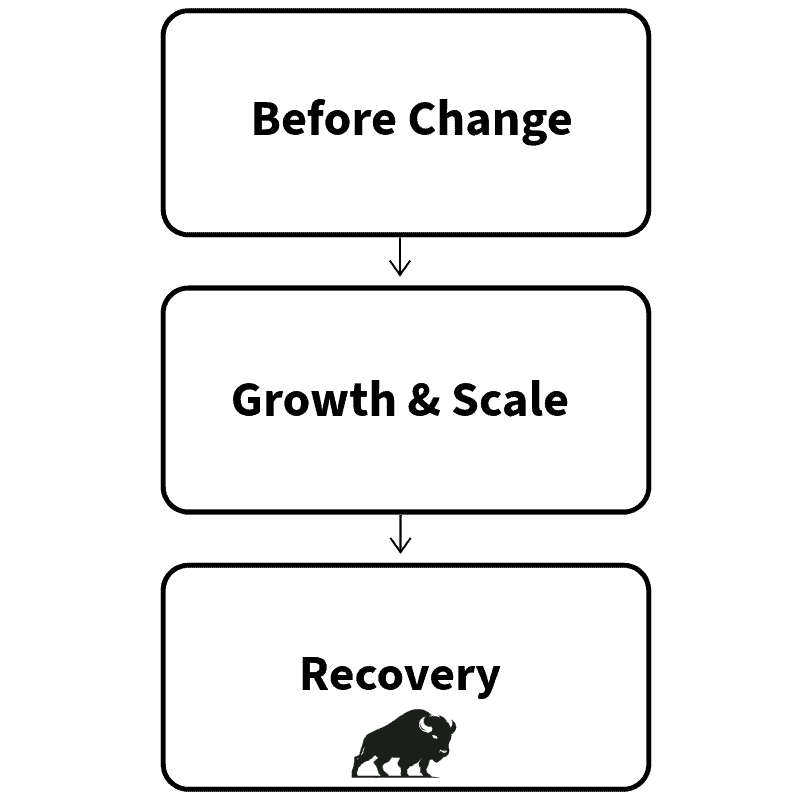
SEO pricing shifts as a website’s condition and risk profile evolve. Different phases, planning, growth, instability, or recovery, introduce new constraints.
Pricing adjusts in response to how much coordination, analysis, or risk mitigation is required at each stage.
These phases do not always follow a straight line.
A site may cycle through them multiple times as goals shift, platforms change, or market pressure increases.
SEO pricing also responds to external changes. Search engines, competitors, and user behaviour all evolve.
These dynamics shape How SEO Works, and why pricing adapts. Understanding how SEO works provides context for these shifts.
Pricing before major changes
Before migrations, redesigns, or platform changes, pricing reflects preventive responsibility. The focus is on protecting visibility through planned disruption.
Effort centres on identifying valuable elements, mapping dependencies, and validating proposed changes.
Audits assess risk by identifying what must remain intact. Pricing reflects the work required to preserve existing visibility while enabling safe change.
Pricing during growth and scale
As a site grows, pricing reflects the increased effort required to manage scale.
Growth introduces more pages, more internal links, more keywords, and more performance signals, all of which must be tracked and aligned.
To maintain clarity, decisions must be sequenced across more variables.
Content must reinforce structure.
Technical systems must scale without disruption.
Trust signals must remain consistent across wider coverage.
Pricing increases because more dependencies must be interpreted, prioritised, and maintained.
Scale introduces interdependence. The cost reflects the effort required to maintain stable progress as complexity increases.
Pricing after decline or instability
Following a drop in performance, pricing reflects the complexity and risk of recovery.
Visibility declines typically emerge from overlapping issues, such as conflicting signals, misaligned content, technical degradation, or poorly timed changes.
Recovery work begins with diagnosis.
The source of disruption must be identified rather than the symptoms. Search engines need to be given clearer signals, structured consistently, so that the site can be interpreted correctly. This requires coordinated correction, not isolated fixes.
Pricing rises because progress must be rebuilt under conditions during periods of technical uncertainty.
Stabilisation becomes the first objective, growth resumes only once risk is under control.
Why does SEO often cost more after problems appear?
Because accumulated issues require deeper analysis and greater caution. Delays allow constraints to stack up. Diagnosing causes, correcting signals, and restoring trust all demand more controlled effort, and pricing reflects that responsibility.
Choosing the Right SEO Investment for Your Situation
The right SEO investment depends on how far your visibility needs to reach and how complex your site’s constraints are.
As reach expands and conditions grow more variable, the work required to manage visibility increases. Pricing follows that effort, not volume alone, but the level of interpretation and oversight involved.
Two factors shape investment: scope and complexity.
Scope defines whether visibility is local, national, or international.
Complexity describes how many technical, structural, and competitive conditions affect outcomes.
When both are narrow, SEO remains tightly focused. When either expands, coordination becomes essential.
The goal is fit. Effective SEO investment aligns responsibility with condition, structured enough to manage risk, specific enough to meet need.
Local SEO pricing considerations
Local SEO focuses on geographic association. Visibility depends on how clearly a business is linked to a specific place and how contested that local area is.
Pricing reflects the effort needed to reinforce location signals and stand out among nearby competitors.
While scope is usually limited, competitive density can increase the strategic input required.
See more in Local SEO Services.
National SEO pricing considerations
National SEO increases scope and structural demand. Visibility must extend across broader regions, with content organised clearly and authority signals scaled accordingly.
Pricing reflects the need for topic coordination, structural alignment, and longer planning cycles to manage country-wide relevance.Explore National SEO Services for further context.
International SEO pricing considerations
International SEO introduces layered complexity. Multiple regions, languages, and user expectations raise the risk of duplication, misalignment, and targeting error.
Pricing reflects the strategic oversight required to maintain clarity across markets. Structural precision and signal consistency become critical.
See how this is handled in International SEO Services.
When does SEO complexity justify specialist involvement?
When uncertainty becomes a business risk. If constraints are unclear, outcomes unpredictable, or sequencing decisions difficult to manage internally, specialist involvement provides structure, interpretation, and risk reduction. In such cases, a Bristol SEO Company with diagnostic expertise is engaged to guide evaluation and execution.